AI Services
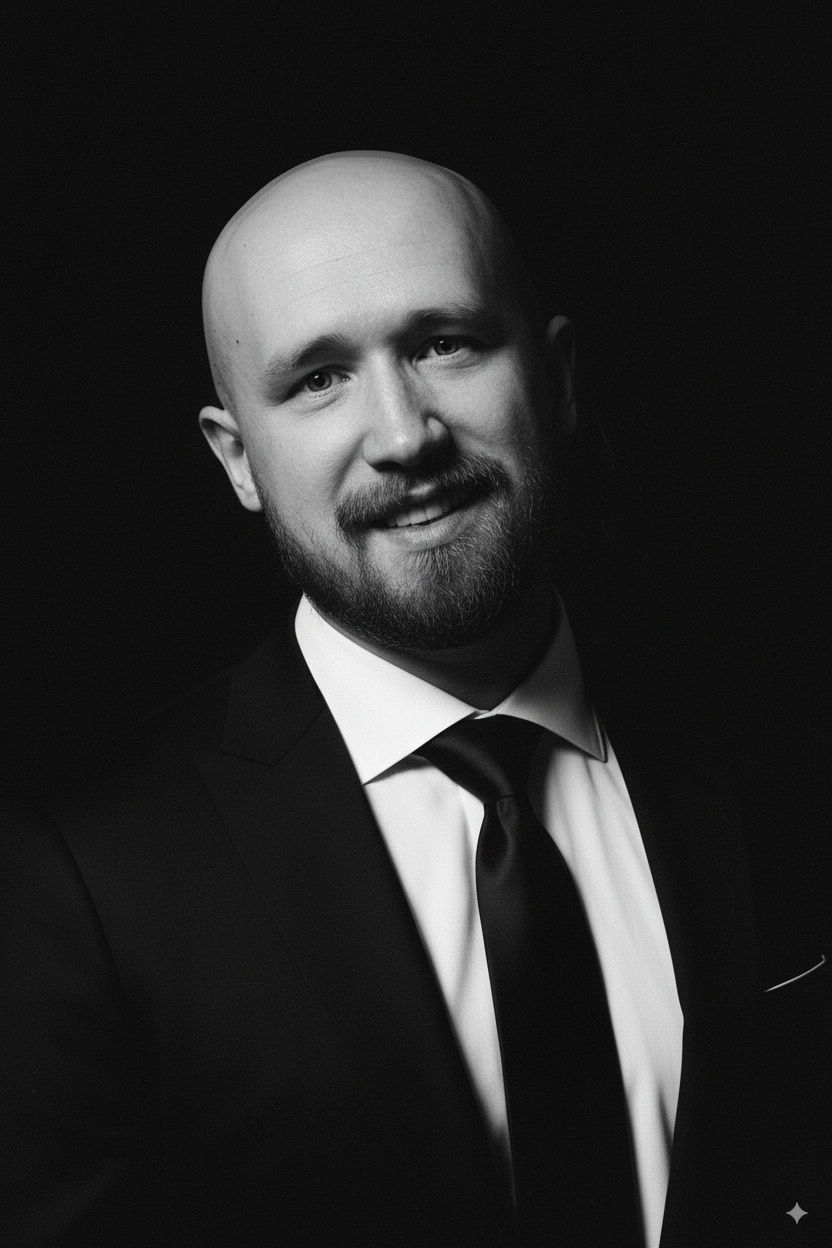
Aleksander LukashouAI Consultant & Agentic AI Engineer
I design and build production Agentic AI and Generative AI systems for enterprises: multi-agent orchestration, RAG, and LLM platforms on Azure Databricks, AWS Bedrock, and OpenAI that automate complex business workflows. I lead engagements end to end, from executive discovery to deployed, accepted results.
Powering Business with GenAI
Agentic AI • RAG • Enterprise Automation
I help forward-thinking companies unlock the true potential of Artificial Intelligence. Moving beyond simple chatbots, I architect and deploy robust Agentic AI systems that autonomously plan, execute, and solve complex business challenges. That work is recognized well beyond my home market: I am a LinkedIn Top Voice in AI and have been nominated and featured by the AINext Awards & Conference, the AI & Cloud Convergence Summit & Awards, and the World Leaders in Data & AI (WLDA) Summit.
My expertise lies in building production-grade applications using the modern AI stack: LangChain, LangGraph, OpenAI, Anthropic Claude, Amazon Bedrock, and Azure Databricks. Whether it's a high-precision RAG (Retrieval Augmented Generation) system, a talk-to-your-data analytics agent, or a fleet of autonomous agents, I deliver solutions that drive real ROI.
I own engagements end to end: leading discovery with executives and product leaders, framing the economic and operating problem, defining the value hypothesis, scope, and acceptance criteria, producing the key analysis and architecture myself, and staying accountable through implementation until the system is deployed, accepted, and in daily use. I have led R&D teams of up to ten engineers and directed technical development at a fast-growing startup, so I am comfortable carrying the mandate, the team, the client, and the answer at the same time.
Consulting
Strategic roadmaps for GenAI adoption, AI transformation, and agentic AI use-case selection.
Engineering
End-to-end development of scalable AI agents, RAG systems, and LLM platforms, from architecture to production.
Trusted by Industry Leaders




AI Consulting & Engineering Services
I work with enterprises as an independent AI consultant and hands-on engineer. Engagements range from a few weeks of AI strategy work to owning the architecture and delivery of a production GenAI platform end-to-end. Recent work includes a marketing GenAI suite for a global consumer-goods company and a churn-analytics agent ecosystem for a European telecom operator, both on Azure Databricks. On every engagement I own the relationship, the economic case, scope, governance, key deliverables, and the implementation path.
Before focusing on Generative AI, I led machine-learning and computer-vision teams in the automotive industry, delivering perception features for autonomous driving at companies such as Aptiv, BMW, and Volkswagen. That background shapes how I build AI today: safety-critical thinking, rigorous evaluation, and systems that hold up in production rather than in demos.
AI Strategy & Transformation
Assessment of where Generative AI and agentic AI create measurable value in your business, followed by a prioritized roadmap. Covers use-case selection, build-versus-buy decisions, platform choice, governance, and the team and skills needed to run AI in production.
Agentic AI Systems
Design and hands-on build of multi-agent systems: orchestration, intent routing, tool calling, and stateful loop and graph workflows with LangGraph. Includes harness engineering, evaluation loops, guardrails, and observability so agents stay accurate and predictable as usage grows.
RAG & Talk-to-your-data
Retrieval Augmented Generation systems over private documents and enterprise data, with access control, hybrid search, and citation. Conversational analytics agents that turn natural-language questions into governed SQL, statistics, and root-cause analysis.
LLM Platform Engineering
Cross-product AI integration layers on Azure Databricks, AWS Bedrock, OpenAI, and Anthropic Claude: model routing, prompt and tool registries, chat runtimes, cost and latency control, and CI-style LLM evaluation pipelines that keep behavior consistent across teams and products.
Industries
Consumer goods and marketing, telecommunications, automotive and autonomous driving, logistics, and home services. Typical outcomes are agent ecosystems that analysts and marketers use daily, internal knowledge assistants with strict access control, and AI integration layers that let several product teams ship on one shared foundation.
How I Lead Engagements
I work with leadership teams when AI needs to change the economics of a business, not just add a chatbot. Clients buy defined work: an AI transformation question, an AI product to build, or a deployment to land. Every engagement starts bounded, establishes the evidence, delivers the result, and expands only when further work is justified.
The central task is always the same: turn an important company problem into a defensible recommendation, turn that recommendation into an accepted deployment or operating change, and earn the follow-on through the result. I carry the mandate, the team, the client, and the answer at the same time, responsibilities that large consultancies spread across several roles.
- 01
Discovery and framing
Senior discovery with executives, product leaders, and operating partners to establish the economic and operating problem behind the AI request. I frame the question, map decision rights, and name the accountable client owners before any build starts.
- 02
Value hypothesis and evidence plan
A written value hypothesis, evidence plan, scope, and acceptance criteria. Work starts as a bounded question or a proof of concept with success metrics, and I decline work that is too small, unmeasurable, or outside my mandate.
- 03
Build and deploy
I personally shape the architecture and key deliverables, lead the workshops and readouts that determine the client's decision, set outcomes and guardrails for engineers, challenge technical choices, and remove institutional blockers. I stay accountable until the system, workflow, or operating change is deployed and accepted.
- 04
Handover and expansion
Handover to client teams with the operating change in place and the result measured. Expansion is earned through evidence, not proposals. Learning from each engagement is generalized into reusable methods while client confidentiality is protected.
What I own on every engagement
- The client relationship, from first question through deployment and follow-on
- The economic case, scope, governance, and acceptance criteria
- The key analysis, architecture, and deliverables, authored by me rather than delegated
- The implementation path, including the difficult integration and change work
- Qualification, proposals, and commercial conversations from the start
Working with engineers and AI agents
With engineering teams I set outcomes and guardrails, challenge technical choices on architecture, data flows, integrations, and security constraints, and clear the institutional blockers that stall deployments. I write production code myself when the engagement needs it.
I use an agentic delivery workflow every day: AI agents structure discovery notes, maintain engagement state, gather evidence, draft analyses, and prepare deliverables. Agents extend my capacity, but I remain responsible for their output. Anything that reaches a client is verified against source data or a reproducible test, and decisions on scope, architecture trade-offs, risk, and go-live stay human.
Leadership track record
Architecture owner and hands-on lead, marketing GenAI suite
Own architecture and delivery end-to-end across three marketing domains for a global consumer-goods company; drive back-end and front-end migration plans into the product roadmap together with PMs and stream architects.
Founder of an agent ecosystem, European telecom operator
Built a churn-analytics agent ecosystem from zero, integrated it into enterprise workflows, and carried it from proof of concept to a system analysts rely on.
Team lead of ten engineers, autonomous driving
Led a team of ten developers designing ML object verification for autonomous vehicles, plus bird-eye-view SLAM, high-beam assist, and real-time lane detection features for automotive OEMs and suppliers.
Technical director, fast-growing home-services startup
Directed technical development of a contractor-client matchmaking platform with dynamic pricing and workload forecasting during the company's expansion across Europe.
Frequently Asked Questions
- What does Aleksander Lukashou do?
- Aleksander Lukashou is an AI consultant and engineer who designs and builds Agentic AI and Generative AI systems for enterprises. He owns architecture and hands-on implementation: multi-agent orchestration, RAG, talk-to-your-data analytics, and LLM platforms on Azure Databricks, AWS Bedrock, OpenAI, and Anthropic Claude. He is a LinkedIn Top Voice in AI and has been nominated and featured internationally by the AINext Awards & Conference, the AI & Cloud Convergence Summit & Awards, and the World Leaders in Data & AI (WLDA) Summit.
- What is Agentic AI, and when does it make sense?
- Agentic AI systems use large language models that plan, call tools, and iterate in loops or graphs instead of answering in a single shot. They make sense when a task needs several steps, live data, or judgment calls, such as root-cause analysis, research, or workflow automation. For simple lookups, a well-built RAG assistant is usually cheaper and more reliable.
- Which platforms and frameworks do you work with?
- Azure Databricks (Mosaic AI, Model Serving, Unity Catalog), AWS Bedrock, OpenAI, Anthropic Claude, LangChain, and LangGraph, plus vector search and evaluation tooling. Platform choice follows the client's existing data stack rather than the other way around.
- What is harness engineering, and why does it matter for AI agents?
- A harness is the code around the model: tool definitions, routing, memory, guardrails, evaluation loops, and observability. Most production failures in agentic systems come from the harness, not the model, so it is engineered and tested like any other critical software component.
- What industries and clients have you worked with?
- Consumer goods, telecommunications, automotive, logistics, and home services, including engagements with BMW, Volkswagen, Aptiv, Deutsche Post, EPAM, Unity, AGH University, and CleanWhale. Most engagements are remote-first with clients across Europe.
- How do you lead an engagement?
- End to end. I lead senior discovery, frame the economic and operating problem, define the value hypothesis, scope, and acceptance criteria, personally produce the key analysis and architecture, lead the workshops and readouts that decide the outcome, and stay accountable through implementation and handover. My involvement does not end when the recommendation is presented; it ends when the system or operating change is deployed, accepted, and measured.
- How do you use AI agents in your own work, and how do you verify them?
- AI agents structure discovery, maintain engagement state, gather evidence, and draft analyses and deliverables every day. They extend capacity, but I remain responsible for the output: anything that reaches a client is checked against source data or a reproducible test, and decisions on scope, architecture trade-offs, risk, and go-live remain human.
- What kind of work do you decline?
- Work that is too small to change anything, work whose result cannot be measured, work outside my mandate, and engagements where the expected deliverable is a slide deck with no path to deployment. Narrowing or stopping work whose result cannot be defended is part of the job.
- How does an engagement start?
- With a short discovery call to understand the business problem, data, and constraints. From there it is either a scoped AI strategy assessment or a proof of concept with clear success metrics, which then grows into a production build if the results justify it.
Get In Touch
Ready to transform your business with AI? Let's discuss your project.